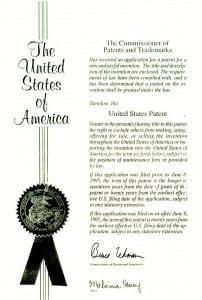
Intellectual property in the UK is split into 4 main sections which every protect a numerous kind of creation or invention from becoming copied illegally. These 4 kinds are patents, styles, trademarks, and copyrights. The amount and type of protection your invention will receive in the UK depends on which kind of intellectual property cover you have.
Patents are designed to shield new processes and attributes of merchandise. If you own a patent on a procedure, no-1 can manufacture, copy or sell goods employing the very same method with no gaining your permission. With a patent you also have the selection to sell your invention (including the rights to it), license it (when keeping all of the intellectual property rights oneself) or pick out to enable folks to use your patented approach if it positive aspects you in some other way. If any company or individual begins using the method or feature you have patented without having your permission you can sue them, and will have a quite robust case in court.
A patent is therefore a robust card to hold for a enterprise, and is also fairly hard to secure. For an invention to be patentable it must be completely new, have produced a leap forward inventively in a way that is not obvious to an expert in the field, and it must be able to be reproduced in market. There is no point in patenting one thing that can not be reproduced.
On the other hand, there are a number of items that your invention can't be if it is to be patented. For example, you cannot patent a literary perform, such as a song or a book. You can't patent a scientific discovery. You can't patent any strategy of medical remedy (or a diagnosis), and you can't patent anything which is criminal or immoral. Finally, you cannot patent a way of presenting details, a way of performing business enterprise or a approach of playing a game.
Even if your invention passes all of these criteria - what are the probabilities that somebody has previously patented a comparable approach or feature? To check, one can ask the IPO (the Intellectual Property Office) to do a patent search for potentially clashing patents for a fee. This will give you further data on how likely it is your patent is going to pass, give you an thought of the patents your competitors hold, and also give you a beneficial overview of the present state of the art technologies in your field.

No comments:
Post a Comment