Like that for creative thinking to get an idea for patent also, a clear goal is very much important.
For getting patent ideas, we need to crate problems in the existing one.
For getting patent ideas, we need to crate problems in the existing one.
 The claimants had alleged various breaches of their UK intellectual property rights by the defendant. The defendant made an application which challenged the jurisdiction of the English courts.
 Commercial Litigation - Patent Infringement in the UK by Defendant
;In the event you are filing a PCT national phase application, provide your associate in India following information:
(iii); English translation of the International Application if filed and published in language other than English.
(v) ;English translation of the priority documents, if filed and published in language other than English
;Priority documents are to be filed in India within 31 months from date of priority, therefore if Form PCT/IB/304 is not available, provide your associate the certified copy of priority documents along with your instruction, so that all documentation can be completed on time.
;Where the International application or the priority application are in language other than English, provide an English translation of the same to your associate. ;
;In India, the Patent rights accrues from the date of publication of application in India, it is therefore advisable to ensure speedy publication of the application.
;A Patent application in India is not examined unless a request for Examination is filed within 48 months from the date of priority. Filing of documents except drawings and affidavits:
Amended as well as;superseded documents to be submitted electronically.
By including elements like these in a software patent application, an inventor can prepare for changes to the law that might otherwise prevent the granting of protection for a software invention.
Software Patent Strategies If Federal Circuit Decisions Results in a Change to the Law
India is fast becoming the world's first choice destination for healthcare services - especially cardiac surgery. On occasion, however, the ductus arteriosus ductus arteriosus does not close on its own and this is referred to as a patent ("Patent" mean open) ductus arteriosus. Infants with a larger PDA may exhibit different symptoms. Symptoms may include: ·Fatigue ·Sweating ·Rapid breathing ·Heavy breathing ·Congested breathing ·Poor weight gain The symptoms of PDA may resemble other medical conditions or heart problems.What does the surgical treatment of Patent Ductus Arteriosus involve?Like other Congenital Heart Diseases, Patent Ductus Arteriosus can close spontaneously if it is small. However, surgical intervention may be needed if the patent ductus arteriosus does not close until the child is 6 months of age. The surgical repair for patent ductus arteriosus is performed under general anesthesia in a hospital setting. What is the long-term outlook after Patent Ductus Arteriosus surgical repair? Patent Ductus Arteriosus Surgery in India:Many renowned hospitals in India brings you're the very best of medical treatments and state of art medical instruments. Besides innovative cardiac treatments, these cardiac care centers or hospitals in India also provide check ups as a preventive step. To know more about Hospitals in India and the patent ductus arteriosus surgery packages available in Hospitals,Please visit- mportant Details:Medical Tourism to India International Patient international.phpEmail
Even though legal malpractice claims arise out of state law, the CAFC said, they require interpretation of federal patent law and therefore fall within the federal courts' exclusive jurisdiction.
Question of Patent Law
In Air Measurement, the plaintiff, Air Measurement Technologies (AMT), filed its malpractice complaint in state court but the law-firm defendants removed the case to federal court. AMT sought to return the case to state court, alleging that the federal court lacked subject-matter jurisdiction. "Because proof of patent infringement is necessary to show AMT would have prevailed in the prior litigation, patent infringement is a 'necessary element' of AMT's malpractice claim and therefore apparently presents a substantial question of patent law conferring § 1338 jurisdiction," the CAFC reasoned.Claim Drafting Mistake
Immunocept sued its lawyers for malpractice in federal court, alleging the patent statute as the basis of jurisdiction. Immunocept could not prove its case without addressing the issue of the scope of the patent claim, and that brings the case under federal jurisdiction, the CAFC said.
"Because patent claim scope defines the scope of patent protection ... we surely consider claim scope to be a substantial question of patent law," the CAFC said.
Patent Malpractice Belongs in Federal Court
However the first step to get the patent is to get a patent application and do the patent registration. After patent registration, we can use the term ‘patent pending' to imply that the given product is registered for a patent.

- If you plan to license you should plan to file a patent.
- If you plan to develop and sell your product for a short period of time it may not be worth filing a patent. First of all, always perform a patent search with a patent agent or attorney to make sure that you are not infringing on anyone's patent.
The United States Patent and Trademark Office receives hundreds of thousands of patent applications each year. In fact, the Patent Office has recently proposed new patent rules to ease the Examiner workload. In light of the new rule, unless the patent applicant masters the complexities of patent law, the applicant might end up getting a weak patent instead of a strong one.
Imagine you have filed a patent application where you have defined your invention broadly as well as narrowly in ten succinct sentences in what are known as patent claims. Claim 4 refers back to claim 3, which in turn refers back to claim 2. Claim 5 refers back to claim 1 or claim 4. In this example, say claim 5 refers back to claim 1. You, as patent applicant, have a chance to respond to the Examiner. This time, the Examiner softens a little and says, in a non-final rejection, that invention of claims 4 to 10 would be allowable as a patent if you rewrite claim 4 without a reference to claim 1, but continues to reject the broader invention of claims 1, 2, and 3. You can rewrite claim 4 as the Examiner indicated, as new claim 1, and obtain a patent with new claim 1. The Examiner will argue that original claim 5 referred back to original claim 1. You will get a patent with just one claim. If an infringer challenges your patent, and proves that your only claim is invalid, your entire patent would be thrown out.

Differences in the patent families
This includes all the patent documents resulting from a patent application submitted as a first filing with a patent office and from the same patent application filed within the priority year with a patent office in any other country.Patent Family and Legal Status Searching
Traditionally, patent pending means that a full patent application has been filed with the United States Patent Office.; Usually, it also means that the person who applied for the patent (known as the "applicant") is still waiting to see if the Patent Office is going to grant the patent.; Once the patent is granted, the product will usually be labeled "patented" and list the patent number.

The U.S. Patent and Trademark Office (PTO) is currently studying the recently-issued and much-anticipated opinion by the Federal Circuit in Therasense, Inc. v. Becton, Dickinson ; Co. (Fed. In short, the Court tightened up the standards for proving inequitable conduct in a patent case.
In the Therasense case, the Court established that a reference omitted during the prosecution of a patent application is a material reference only if "but for" its exclusion the claim or patent would not have issued.
The prior art cited during the prosecution of this patent application, which included Therasense's own prior issued patent, included membranes that inhibited electrode fouling.
Before making this assertion to the PTO in this case, however, counsel before the European Patent Office in arguing for the prior art issued patent used the same declaration in a (successful) effort to distinguish over another prior art reference that disclosed a test strip having a membrane. Abbott counterclaimed for infringement of the '551 patent and two other patents. The District Court granted summary judgment of non-infringement of the two other patents, but found that the '551 patent was unenforceable as a result of Abbott's failure to submit briefs in the European Patent Office during prosecution of the '551 patent, such briefs pertaining to arguments submitted in support of Therasense's prior art issued patent.
The Court in the Federal Circuit rendered its opinion based on several Supreme Court cases that dealt with inequitable conduct.
In deciding Therasense, the Court opined that an omitted reference is material reference only if "but for" the exclusion of the reference the patent would not have issued.
With regard to the materiality element of inequitable conduct, the Court opined that in order to assert a specific intent to deceive by the Applicant, an accused infringer must prove by clear and convincing evidence that the Applicant acted with specific intent to deceive the PTO. In defining such changes, the PTO may attempt to improve the efficiency of patent prosecution, the quality of patents issued, and/or the costs of patent litigation.
The Therasense Case and USPTO Study Thereof to Assess Impacts on Patent Practice and Procedures
In short, trademarks are your brand.
To Patent your idea, you must first write a provisional patent application. You may negotiate signing fees, royalties, and licensing fees on your idea, in return for negotiating the final patent rights. It contains all of the actual provisional patent application forms -- and only those forms -- required by the United States Patent and Trademark Office (USPTO). Electronic Notebooks and the Requirements to Prove Date of Invention in Patent InterferencesThis paper contains an excerpt of an email I sent to the PIUG (Patent Information User's Group) email distribution list on November 30, 2003.1. In all other major jurisdictions, it is the date of filing of a patent application that is the earliest date allowed to as a date of invention, except where there are issues of theft of invention.2. The law respecting how to prove priority of invention is in fact a well defined body of law. Inventor Assistance for Patents, Prototypes, Marketing ; Licensing
Request Free Invention Kit Now!
(I use the word "patent" here to mean either patent or patent application, for simplicity.) It is the date of that corroborator's review that defines provable evidence a date of invention.
But using a patent agency or a patent attorney can cost thousands of dollars.
;

Intellectual Property
If you own a business or are thinking about starting a new job, you should familiarize yourself with what is known as intellectual property. Intellectual property is the term used to describe certain rights that people can keep more of the "creations of the mind," such as art, writing, inventions, designs, ideas, music or choreography. There are four main types of intellectual property -. Copyrights, patents, trade secrets, trademarks, and
Copyrights
copyright form of intellectual property which protects the original authors of both published and unpublished kreacije.Prava authorship for these works remain the sole initiator of properties for a specified period of time under the copyright laws. After the period expires, then these papers are open to others for reproduction and publication.
Copyrights are registered by the U.S. Copyright Office. Copyrights filed in or after 1978 will last for the entirety of the author's life plus 70 years after his death.
Patents
Patents are legal property rights applicable to the invention (as opposed to works of any kind of art or literacy), and they must be distributed by the United States Patent and Trademark Office. Typically, patents relating to items such as processes, machines, production design, biological discoveries, or "composition of matter ."
Like copyrights, patents, inventors are available only for a limited period of time before they expire. Patents generally last for 20 years after the date on which the patent application is filed.
trade secret
Trade secret practices, designs, formulas, processes, recipes, or ideas that are used by a company that allows it to gain leverage in its industry. Typically, trade secrets are kept hidden his own means, as opposed to being protected by government policies such as patents and copyrights prava.Primjer self most commonly used trade secrets with the relevant information to lock away in a bank vault. Because trade secrets lack of legal protection, after they leaked to the public, they are available for use by anyone.
Trademarks
Trademarks include any words, phrases, symbols, logos, designs, or devices used in conjunction with a particular brand or good to be different from other products in the industry. Trademarks are used for identification purposes and are legally protected after they are registered with the United States Patent and Trademark Office.

New discoveries? I heard the revolving restaurant combination television tower? How about color x-ray images? Or heard about a new invention that turns water into salt water drink? These are wacky new inventions not in full use!
Are you looking for shirts that do not require ironing? For $ 4,000.00, you are able to purchase a shirt processed out of titanium-alloy fibers interwoven with nylon. Suffer from persistent back pain? New invention, based on data from the makers of SynchroMed infusion system that works better and requires much lower doses than intravenous methods. It is a pump that delivers medication directly to the place where you can almost učinkovita.Novi invention is paired with the world's first and only install and program the drug pumpa.Morfij comes packaged in a pager-sized pump and placed under the skin in želucu.Minute tube or even a catheter connected the pump will inject a measured dose of medication for the fluid-filled space around the spinal cord.
There are hundreds of new inventions were introduced to the market.
Do you have a new invention worth patenting? Place to go to the USPTO, United States Patent and Trademark Office. It is mandated by Congress, for the inspection and issuance of patents and is responsible for setting standards on what defines a new invention.
Even though you can not patent an idea, you are able to protect his invention in the beginning. Apply to the USPTO for the detection dokumenta.Datum initial conception of his new invention to the account number that USPTO gives your document.
disclosure documents for the benefit of the individual which documents the invention date konceptualizacije.USPTO leaning towards granting patents, the individual who initially thought the idea and took out a disclosure document to have it recorded. With the publication of a document for his new invention, you are able to move towards patenting new inventions.
new invention is considered patentable if:

The trademark look on merchandise and services is incredibly important. A trademark is destined to give a distinctiveness and characteristic on the packages and services. As a choice of a trademark the businessmen indeed want to have a fantastic name, very easy to be remembered, easy to be pronounced and nice to be heard. The ease and uniqueness of a trademark is calculated to appeal to the customers on the items or services offered. Trademarks such as "Gucci", "Louis Vuitton", "Cartier" and "Salvatore Ferragamo" are the well known trademarks amidst the youngster and wealthy ladies. Carrying a "Louis Vuitton", "Cartier" or "Gucci" handbag though shopping on the mall certainly is a prestige for certain society and the predicate as the wealthy everyone could be gained by them.
So for businessmen a trademark is an crucial thing. A trademark can be interpreted in many capabilities and it depends on which portion it is becoming viewed. For that reason it is routine if a trademark is potentially could develop the conflict of law. A trademark can make a old client becomes rich and wealthy past client but on the opposite it could also downgrade and produce a person becomes quite poor.
The conflict brought to the Commercial Court is 1 of the examples exactly where a person files a lawsuit to the other even though the individual in the opinion that his/her trademark is producing infringed by the other party and afterward it damages the offerings or services supplied by the assumed person. In many situations the rationale for the lawsuits are based on the "existence of fundamental or whole similarity "between 1 party's packages to others. Nonetheless in factor it is also complicated for us to figure out whether a certain trademark is similar investing in the other or not.
What is the simple element of a "similarity"? Is it similar among the trademarks "Burger King", "Burger Children" or "Burger Queen"? The Explanation of Post 6 Law No. 15 Year 2001 on Mark states that "similarity" is in case of there is a robust element between a mark to a new which creates an impression of the similarity in shape/form, placing or sound.

Intellectual Property
If you own a business or are thinking about starting a new organization, you really should familiarize oneself with what is known as intellectual property. Intellectual property is a phrase utilized to describe specific legal rights that consumers might hold over "creations of the mind," such as works of art, writing, inventions, styles, tips, music, or choreography. There are four major kinds of intellectual property -- copyrights, patents, trade secrets, and trademarks.
Copyrights
A copyright is a form in intellectual property that protects the original authors of each published and unpublished creations. The rights of authorship for these functions stay solely the possessions of the originator for a specified period of time under copyright law. When the time period has elapsed, then these works are open to others for reproduction and republication.
Copyrights are registered by means of the U.S. Copyright Workplace. Copyrights filed in or right after 1978 will last for the entirety of the author's life plus 70 years immediately after his or her death.
Patents
Patents are legal property rights applied to inventions (as opposed to works of any type of art or literacy), and they need to be distributed by the United States Patent and Trademark Office. Typically, patents apply to such items as processes, machines, manufacturing styles, biological discoveries, or "compositions of matter."
Like copyrights, patents are available to the inventors for only a certain period of time just before they expire. Patents commonly last for 20 years soon after the date on which the patent application is filed.
Trade Secrets
Trade secrets are practices, designs, formulas, processes, recipes, or tips made use of by a business that makes it possible for it to acquire leverage in its market. Usually, trade secrets are kept hidden by one's own indicates, as opposed to being protected via government policies such as patents or copyrights. An example of self-protection commonly utilized with trade secrets is locking the pertinent information and facts away in a bank vault. Due to the fact trade secrets lack legal protection, as soon as they are leaked to the general public, they are readily available for use by any one.
Trademarks
Trademarks involve any words, phrases, symbols, logos, styles, or devices that are utilized in association with a specific brand or great in order to distinguish it from other products of that industry. Trademarks are utilized for identification purposes, and are legally protected as soon as they have been registered with the United States Patent and Trademark Office.

It is a typical litigation scenario: One side's expert says one thing even though the other side's says just the opposite. But when - as in patent circumstances - professional opinion is so crucial to the outcome, is summary judgment possible when the two specialists disagree?
Summary judgment, immediately after all, calls for a judge to conclude that there is no genuine dispute as to any material fact. If the professionals are at odds over regardless of whether a patent is infringed, isn't summary judgment ruled out?
In a September 21st opinion, In re Gabapentin Patent Litigation, the Federal Circuit Court of Appeals answered that very question in a case involving a pharmaceutical patent. In ruling that the district court erred when it granted summary judgment, the court shed light on how judges and lawyers really should deal with this scenario.
At the heart of the case was drug-maker Warner Lambert's patent covering a process for preparing a very purified version of the compound gabapentin, the active ingredient in the epilepsy drug Neurontin. When various competing drug providers sought approval to marketplace generic versions of Neurontin, Warner Lambert filed suit against them.
By means of the Judicial Panel on Multidistrict Litigation, the many actions had been consolidated in federal court in New Jersey. There, the defendants filed motions seeking summary judgment of noninfringement and invalidity.
A key disclosure of the Warner Lambert patent was that its approach produced a gabapentin composition with "less than 20 ppm of an anion of a mineral acid." Obtaining that Warner Lambert failed to generate adequate evidence to show that the defendants' generic items met this limitation and for that reason infringed its patent, the district court granted summary judgment in favor of the defendants.
In the district court, Warner Lambert had based its opposition to summary judgment on the results of pH tests performed by its analytical expert. Those results, it argued, countered testing performed by defendants' professional and designed a genuine issue of material fact.
Conflicting Specialists
On appeal to the Federal Circuit, Warner Lambert argued that the conflicting opinions of its professional and the defendants' professional - each and every based on distinct approaches of testing - produced a genuine concern of material fact and that the trial judge erred by resolving that factual dispute on summary judgment. The defendants countered that Warner Lambert's pH tests were invalid and imprecise.
The Federal Circuit sided with Warner Lambert, agreeing that the outcome of its expert's testing supplied adequate evidence to generate a genuine issue of material fact as to whether or not the generic drugs would infringe its patent.
The court gave short shrift to the defendants' argument concerning the validity of the pH testing, acquiring that they had expressly excluded that argument from their original summary judgment motion. Ironically, they had excluded that argument in order to keep away from factual disputes that may possibly undermine their summary judgment motions.
As to the test's precision, the court located that even immediately after factoring in the test's margin of error, the final results showed that the defendants' drugs could fall inside the 20 ppm claim limitation of Warner Lambert's patent.
"Based on the record ahead of us, we conclude that the district court erred in granting summary judgment of noninfringement based on Warner Lambert's purported failure to meet its burden of proof," the court mentioned. "The record shows that Warner Lambert proffered adequate evidence to create a genuine problem of material fact concerning no matter whether the accused items met the 20 ppm claim limitation of the '482 patent."
Having decided that summary judgment was improper, the Federal Circuit went on to review the trial court's construction of two important claims in Warner Lambert's patent, 1 defining "anion of a mineral acid" and one more defining "adjuvant". In each cases, the circuit court affirmed the trial court's construction.
The case is In re Gabapentin Patent Litigation, No. 2006-1572 (Sept. 21, 2007).

Getting invention suggestions protected by a patent gives the patent owner definite legal rights. A patent agent or lawyer can inform you of those patent invention rights. Invention tips that are not protected by a patent or that are not patentable might possibly be employed liberally by anybody. This might possibly lower the invention commercial value. For this 1 cause some providers view patent protection crucial for their own invention suggestions and for invention tips submitted to them. For that reason, those businesses may possibly anticipate inventors submitting inventions to them to seek invention patent rights issued by a patent just as any organization would be needed to protect their own invention tips.
There may possibly be complex legal issues connected to invention concepts submitted to huge corporations. Those problems can involve joint development of the identical invention. Another example could be two inventors that developed the invention together, which includes trade secret ownership and confidential rights. A patent agent or lawyer can support you with those concerns prior to applying for an invention patent.
Your patent agent or lawyer may possibly advise or suggest that you acquire an issued patent prior to submitting your tips to a big provider. Still, some providers may perhaps allow you to disclose and talk about your thought after an invention patent application has been filled. Maintain in thoughts that the organisations that you submit your ideas to prior to an invention patent has been issued could be below no obligation to preserve your concept a secret. They could possibly also be below no obligation to neither pay something nor refrain from making use of your concept although the invention concept is being evaluated unless a written agreement has been completed.
Following the invention idea evaluation, the firm might be under no obligation to preserve your invention idea a secret or might possibly not refrain from applying your invention concepts unless an agreement in writing is completed. The benefit of having an issued invention patent is that it entitles you to rights as defined by the invention patent claims. Based on the organization that you are submitting your concepts to, a patent agent could urge you to acquire an issued invention patent prior to submitting your inventions to a provider for evaluation.
Nonetheless, there are a number of other businesses that will evaluation your invention concepts prior to an invention patent application is in progress. Or, prior to an invention patent has been issued. For example, the business Plaid will accept invention concepts just before an invention patent has been issued. The firm Plaid does agree to preserve your invention concept submission confidential and will not use or disclose the invention concept to any third parties or workers of Plaid, other than those Plaid staff who participate in the review of the thought submission, unless such disclosure is needed by law or unless Plaid acquires expertise of the submissions prior to your disclosure thereof.
Sears is an exception, and could accept invention ideas prior to an invention patent have been issued or an invention patent application is in procedure. Even so, by contemplating a submitted idea, Sears may well not obligate itself to pay any compensation whatsoever for its use of un-patentable suggestions. Also, Sears may well make no commitment that your submitted invention suggestions shall be kept a secret or confidential. It might possibly be required for a significant provider like Sears to refer your invention idea submission to a quantity of persons at Sears or at third parties, such as vendors and manufacturers, who have company dealings with Sears. Give some thought to this when submitting your invention to substantial businesses, considering that this could be essential to thoroughly evaluate your invention thought submission. You might want to contemplate such as a period of limiting time for the corporation that you are submitting you invention thought to evaluate your invention idea. An appropriate amount of time could be 45 to 60 days to evaluate an invention submission.
Generally be sure to establish get in touch with with the enterprise that you are submitting your notion to just before sending any material or detailed descriptions of your invention notion. Confirm if the enterprise accepts outside concept submission and what the company's submission rules and guidelines are. Keep in mind, till a contract is signed and completed, your only legal rights in and to the submissions remain with you.

Provisional Patent Application (1 year term) - Provisional applications are US applications for a patent which do not mature into an issued patent (not examined by the USPTO) unless further methods are taken by the applicant inside twelve (12) months of filing the provisional application.
What are Provisional Patents used for?
Such applications are created to deliver lower price 1st patent filing by minimizing the formal specifications such as not requiring formal drawings, claims, oath and declarations, or an facts disclosure statement having said that, if drafted appropriately the provisional application supplies the inventor with an application priority date and "patent pending" status.
Note: A provisional application need to be converted to a non-provisional application inside one year of the filing date to sustain priority based on the provisional filing. Failure to file the non-provisional could result in loss of patent rights, including a total bar to acquiring a patent.
Here is a checklist to help you choose what variety of patent is ideal for you:
What is my timeline for receiving my invention to the marketplace?
Is there an urgency to market my item?
What is my budget for acquiring a patent?
When patented, what is my marketing plan?
Is there somebody I can call who has filed a provisional patent in the past?
Have I visited trusted web pages to find out as significantly data as doable about this type of patent?
Lastly, I want you to know that obtaining a patent can be the largest day of your life. Please don't jump into anything until you have done your homework.

Software is a huge and expanding market place characterized by rapid item innovation. In addition, software program is also increasingly important to distinguishing and adding value to other goods ranging from automobiles to video books. As a result, software patents are important to prevent competitors from taking advantage of one's software inventions. But, numerous software program inventors are unclear about the procedure of patenting software program.
The software program patent method ordinarily begins with a patent search. A search helps figure out if the subject matter of the invention is patentable, and the most likely scope of a patent. The search finds comparable inventions, referred to as art, that could possibly limit the breadth of the patent or preclude allowance of the patent altogether. The info is invaluable in deciding whether to file a patent application, and how to structure it. However, much of the art for cutting edge software program technologies is nonetheless not public at the time of the search, so the selection must contain estimates of the present state of the technology.
If you determine to proceed with a patent application, the inventors disclose the particulars of the invention to a patent attorney. From that disclosure, I prefer to prepare an initial set of claims and drawings that I then review with the inventors. The second (and third) discussion of the invention usually brings out additional aspects of the invention that can be protected. Following the inventors are satisfied that the claims and drawings accurate capture the invention, I draft the application. The application need to be ready to anticipate and deliver alternatives for various technical obstacles to allowance of the patent. Immediately after an inventor review, we file the application and drawings with inventor declarations, assignments, and facts disclosure statements.
And then we wait. Examination generally begins 1-three years later, while there are techniques to accelerate this. Occasionally examination begins with a restriction requirement, exactly where the examiner asserts that the application includes more than one invention. This could be considering we intentionally included many inventions to differ expenses, and at times considering that the examiner things the invention is too broad. There are a number of useful methods to deal with restriction requirements.
In most cases there is no restriction requirement, and the examiner rejects all or most of the claims mainly because of prior art that is found in the examiner's own search. The examiner will assert that this art shows that your invention is not novel or was obvious. We analyze these rejections, and figure out which arguments are valid and which don't hold water. We then develop a strategy combining persuading the examiner and modifying the patent claims to overcome the rejections. We talk about this strategy with the examiner to get feedback and to persuade. To help get broad claims allowed, I take time to figure out the most effective persuasive strategy for each examiner.
We then file a formal response based on the method, which the examiner considers. The examiner generally conducts one other search, and might possibly come across a new reason to reject your application. In some cases a quantity of iterations are necessary before locating the ideal mixture of language and scope to each shield your invention and have the claims of the application allowed by the examiner. The quantity of iterations is highly dependent on the breadth of the claims that you want. Broader, extra beneficial claims take additional function, and oftentimes even an appeal to be allowed. Soon after the application is allowed, there are problem charges and then maintenance charges following 3.5, 7.five, and 11.five years.
Protecting a software patent is a long and expensive process. On the other hand, when compared with the financial fees of permitting a competitor to copy your innovation and take advantage of your development perform, a software patent is bargain.

Patent attorneys are highly-priced. So why would you want to hire 1? Immediately after all patents are issued by the federal government, so why cannot you just file your patent directly with the government?
You can. But only if you know the following:
If you have all of the above capabilities you can indeed save income. But what if you make a mistake? Suppose that your notion is a real disruptive innovation? What if it is capable of changing whole industries? But you proceed to get a utility patent on your own. Later immediately after you have received your patent, you discover that a competitor has identified a loophole in your patent claims. Now your competitor can use your invention notion with out compensation as long as he does not infringe on your other claims. Your losses are potentially millions, but you saved dollars on your patent application.
Could this happen if you use a patent lawyer? Yes it could, but the likelihood is significantly smaller.
So if you lack some or all of these capabilities or you just want to make sure your patent application is correct, then you have to have to hire a patent lawyer. This is a case of a penny saved equals $ten.00 lost. Of course you will need to do your due diligence. You will need to know that your notion will indeed be profitable. Still, if it is probably to be profitable you will definitely save capital in the long run by hiring a patent attorney.
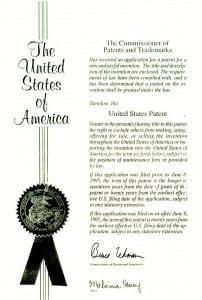
Intellectual property in the UK is split into 4 main sections which every protect a numerous kind of creation or invention from becoming copied illegally. These 4 kinds are patents, styles, trademarks, and copyrights. The amount and type of protection your invention will receive in the UK depends on which kind of intellectual property cover you have.
Patents are designed to shield new processes and attributes of merchandise. If you own a patent on a procedure, no-1 can manufacture, copy or sell goods employing the very same method with no gaining your permission. With a patent you also have the selection to sell your invention (including the rights to it), license it (when keeping all of the intellectual property rights oneself) or pick out to enable folks to use your patented approach if it positive aspects you in some other way. If any company or individual begins using the method or feature you have patented without having your permission you can sue them, and will have a quite robust case in court.
A patent is therefore a robust card to hold for a enterprise, and is also fairly hard to secure. For an invention to be patentable it must be completely new, have produced a leap forward inventively in a way that is not obvious to an expert in the field, and it must be able to be reproduced in market. There is no point in patenting one thing that can not be reproduced.
On the other hand, there are a number of items that your invention can't be if it is to be patented. For example, you cannot patent a literary perform, such as a song or a book. You can't patent a scientific discovery. You can't patent any strategy of medical remedy (or a diagnosis), and you can't patent anything which is criminal or immoral. Finally, you cannot patent a way of presenting details, a way of performing business enterprise or a approach of playing a game.
Even if your invention passes all of these criteria - what are the probabilities that somebody has previously patented a comparable approach or feature? To check, one can ask the IPO (the Intellectual Property Office) to do a patent search for potentially clashing patents for a fee. This will give you further data on how likely it is your patent is going to pass, give you an thought of the patents your competitors hold, and also give you a beneficial overview of the present state of the art technologies in your field.

Introduction and sorts of patent
Countless types of concepts can be patented. Anything that has a function or use can be patented. Also, patent protection can cover a large number of (but not all) varieties of home business procedures, most types of computer programs, new procedures and processes, new chemicals and compounds, and new supplies or new uses for old materials. Where the invention is for a style function or an ornamental cover or casing, for example, then a design patent is the most effective way of protecting the invention. How to get a design patent, and how to patent a design, is explained in a separate section beneath.
How to Patent an Notion
An notion can perfect be protected by a utility patent application. This is also often known as a "regular" patent application. The idea can be explained in words and, if probable, by drawings. The drawings do not need to be like blueprints rather, they are simplified and do not generally have to show conventional features. And, it is not necessary to have a operating model.
Ahead of receiving into the details, we would like to mention that there is also one thing referred to as a "provisional patent application" discussed hereunder. It offers patent pending status for one year, permitting a utility patent application to be filed at any time for the duration of that year. That is yet another way to get a patent. The provisional application is much less costly than a utility patent application, and can be suggested when there is an urgent will need to get a patent application on file with the US Patent Workplace. For example, just prior to a trade show or publication of the invention, there is an urgent require to have the notion on file with the US Patent Office. For further info, see the section beneath called "How to patent employing a provisional patent application."
Here's a basic example showing how to patent an thought for a quite hassle-free and amusing invention. The hassle-free idea: add a blinking light to a pencil eraser. For the moment, we are not concerned with whether or not it has been completed ahead of we could find that out working with a patent search if we wished. For now, the notion would be expressed in words in the patent application, written just as above. And, considering that it is doable to illustrate the notion in a drawing, we would also add a sketch showing exactly where the light must be placed on the eraser. What else really should be shown? The light ought to have a energy source, for example a tiny solar panel or a tiny battery, and connecting wires ought to be shown connecting the energy source to the light. Then, text is added to the patent application by describing the parts shown in the drawings, explaining achievable uses and positive aspects, and mentioning doable alternatives that are included in the invention such as varied kinds of light sources such as LEDs, incandescent bulbs, phosphorescent lighting, and so on.
Next, a claim is added to describe the invention broadly, such as the following:
Claim 1: A pencil eraser having a light, comprising: a pencil body an eraser member attached at one end of the pencil body a light source mounted on the eraser and a power source connected to provide power to the light source.
Standard text is then added such as sections titled: background of the invention summary of the invention brief description of the drawings and an abstract of the disclosure. These are not frequently tough to do, but can take some time.
Then, a Declaration is prepared showing the name of the inventor and title of the invention. This is from a standard form supplied by the US Patent Office.
Last, a cover page such as a Transmittal sheet is ready, listing what is being filed with the US Patent Workplace. The Transmittal page commonly will consist of a check for the quantity of the US government filing fee, and a postcard filing receipt. The check can be omitted, as can the signed Declaration, but in that case the US Patent Workplace will send a notice asking for those items along with a somewhat small late fee.
The drawings might or could not be accepted as filed. If not accepted, the US Patent Office sends a notice, and sets a time period for submitting the formal drawings. A specially skilled draftsman ordinarily prepares the formal drawings, since the US Patent Workplace has pretty precise and detailed needs for the drawings. We function with such a skilled patent draftsman, to give the formal drawings.
The application is examined by the US Patent Office. If granted, the application matures into a utility patent. A granted utility patent can be enforced in court, and it can be assigned and licensed too.
If you call or e-mail us, we would be pleased to talk about your invention or thought. There is no charge for discussing how to patent your idea or invention. At times we can present an insight into how to manufacture or market place the invention, based on our experiences. We can assist with negotiating with prospective distributors, investors, and licensees. We can clarify how to get a patent, how to patent your suggestions, the expenses involved, and any other issues of interest to you. We can clarify what may possibly assist, and the lowest expense methods to get the needed protection. This is at no charge, and we like talking with inventors.
At this point we can give a fixed fee estimate, based on your brief description of your notion. In some instances, we would want to see even more info such as a drawing or a written description, that would aid us form an accurate fixed fee estimate. That is all confidential. At that point, if you wish to proceed further, then you would offer one half the estimated amount in advance we prepare the draft application and paperwork then you send the other half of the fee right after you have approved a final draft that you really feel is ready for filing with the US Patent Workplace.
We would enjoy helping you get a patent! And, if you like, we can give our comments based on our own encounter on how to commercialize the invention, such as suggestions on manufacturing, advertising, and attracting investors.
And that is how to patent an thought!

One of the main items to do when a commercially viable notion hits the brain is to search for a patent for the concept. A patent makes it possible for for the conversion of the idea into a enterprise and prohibits other people from infringing on the idea. Frequently, patent searches through patent search offices entail some footwork as effectively as cash.
Even so, with the onslaught of the Web, there are numerous free of charge patent searches available. Zero cost patent searches are powered by search engines, and contain databases that include all patents applied for more than the past couple of years (inside the patentable period, which usually implies 20 years in the US). Past inventions are cautiously documented, with pictures and characteristics wherever necessary. As soon as a keyword is typed in the search bar, a search is triggered that displays comparable idea patents that may perhaps have been given. It is significant to sort a relevant keyword, as this will have an effect on the outcomes of the search. It is advisable to try searching making use of distinct keywords.
Usually, zero cost patent search websites contain all documented info on US patents (readily available from the USPTO) and European patents (Esp@cenet). Then again, there are many web sites that include patent information and facts from other countries. Before punching in the keyword, the searcher has to click on the proper country tab.
The reason for the surfeit of free patent search web pages is the enormous workload that national patent offices face each and every year. National patent offices also offer their own absolutely free sites to search patents, in order to decrease their quantum of work. Most tips that purport to be original get nipped in the bud when a similar concept is found.
The existing trend is to initially search for a patent on a free of charge search engine. If no patent is found, a patent lawyer is approached for the legal perform. The lawyer will also search for the patent on the zero cost search engine just before accepting the case.
is a common free patent search site that has a database of more than 300000 US and UK patents. The website is consistently acquiring updated, as a great deal more and more patents are becoming awarded.

It utilised to be that in order to do a half decent patent search, 1 would have to pay a visit to a patent attorney. This patent lawyer would charge in between $800-$1,200 or considerably more depending on the invention and the prior art. Moreover, in spite of this price, no ironclad assurances could be given due to the scope and difficulty of the prior art.
Much of this cost was due to the reality that patent attorneys would have to hire a firm on the east coast nearby the United States Patent and Trademark Office to conduct the search in person. As such, immediately after spending hours upon hours going through the records by hand, the fees would rack up real rapid.
On the other hand, thanks to the wonders of technology, inventors can now conduct their own preliminary patent search. Two highly wonderful portals to commence from are: Google Patents and the USPTO Patent Database. Google Patents is a fairly new web page and they are still adding much more documents to their database. The nice factor about Google patents is the capacity to download total pdf's of those patents to your desktops. This is nice because the pdf's also involve the drawings.
But, if your search comes to no avail with Google Patents, then you can go to the USPTO database. 1st commence off with the Issued patents button and reset the date range to 1790. Then type in relevant parts, components, etc. which are related to your invention. You must probably start out off with the title, then go to abstract, specification, and then the claims. Right after you are accomplished with the issued patents section, you need to have to go to the Published patent application section.
Essentially repeat the very same actions. You ought to know that the published application sections does NOT consist of the patent applications which were turned in more than the past 18 months in addition to the inventors who opted to keep their patent applications non-published.
